
For homeowners in Boca Raton, the garage door is more than just an entry point; it is a vital component of home security and daily convenience. From the Mediterranean-style estates in Royal Palm Yacht & Country Club to the bustling family neighborhoods near Mizner Park, a functioning garage door system is essential. However, when the door refuses to close or reverses unexpectedly, the culprit is often the safety sensors.
Garage door sensor repair is one of the most common requests we receive at First Garage Door Repair. Because the photo eyes wire straight into the motor unit, most sensor calls are handled by our garage door opener repair technicians on the same visit. While these small “photo-eye” devices may seem simple, they are sophisticated safety components mandated by federal law (UL 325) to prevent injuries and property damage. In an attempt to save time or money, many South Florida residents attempt DIY fixes, only to fall into common traps that lead to further damage, compromised safety, or costly professional interventions.
In this comprehensive guide, we will explore the nuances of garage door sensor repair, the environmental factors unique to Boca Raton that contribute to sensor failure, and the critical mistakes you must avoid to keep your home safe and your door operating at peak performance.
Understanding the Role of Safety Sensors in Modern Systems
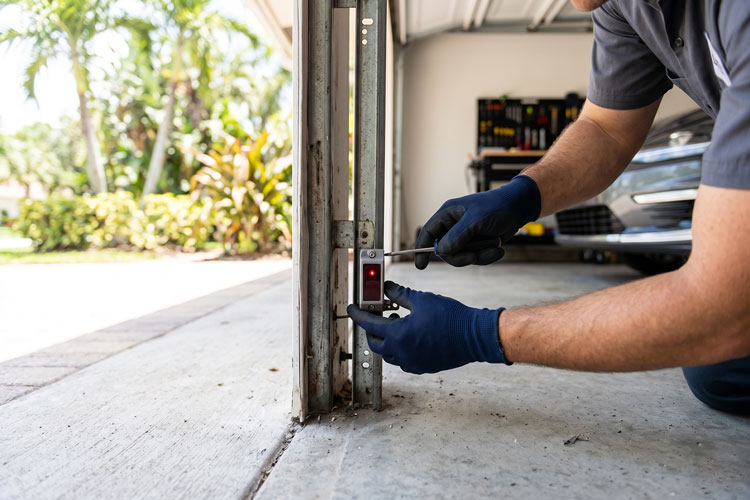
Before diving into repairs, it is crucial to understand how these components function. Garage door sensors work in pairs: a “sending” sensor emits an invisible infrared beam to a “receiving” sensor. If this beam is interrupted while the door is closing, the system automatically reverses the door.
In the humid, salt-air environment of Boca Raton, these sensors are subject to more wear and tear than in drier climates. Corrosion, lens fogging, and even local pests can interfere with the infrared signal. Recognizing that garage door sensor repair is a technical task, rather than a simple “tweak”, is the first step toward a successful resolution.
Mistake #1: Misdiagnosing the Root Cause of Failure
The most frequent error homeowners make is assuming that any closing issue is automatically a sensor problem. While sensors are often the culprit, jumping to a conclusion without a systematic inspection can lead to wasted effort.
Identifying Mechanical vs. Electronic Issues
Before initiating a garage door sensor repair, you must rule out mechanical obstructions. In South Florida’s high-wind zones, tracks can occasionally become slightly misaligned, or debris from tropical storms can lodge in the railings.
-
Check the Tracks: Are there stones, dirt, or spider webs blocking the physical path?
-
Inspect the Rollers: Are the rollers worn out, causing the door to “shake” and jitter, which might temporarily break the sensor’s line of sight?
-
The “Wall Button” Test: If you can close the door by holding down the wall button, the problem is almost certainly the sensors. If it still won’t close, the issue lies elsewhere in the opener or the logic board.
Mistake #2: Improper Garage Door Sensor Repair Alignment
Alignment is the “Achilles’ heel” of the photo-eye system. Because these sensors communicate via a narrow infrared beam, even a fraction of an inch of displacement can cause the system to fail.
The Dangers of “Eyeballing” the Alignment
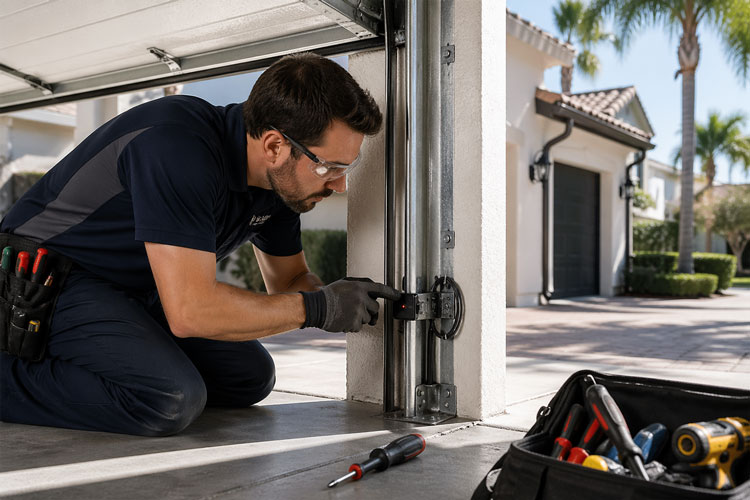
Many homeowners try to align their sensors by looking at them and guessing if they are pointed at each other. This is rarely effective. Professional garage door sensor repair involves using leveling tools or string lines to ensure the two eyes are perfectly perpendicular to the floor and parallel to each other.
Indicators of Poor Alignment
Most modern sensors (such as those from LiftMaster or Chamberlain) have LED indicator lights. Typically, a solid green or amber light indicates a clear path, while a flickering or dark light indicates an alignment break. If you notice your lights are “pulsing,” you are dealing with a marginal alignment that will likely fail as the temperature changes or the door vibrates.
Mistake #3: Overlooking Boca Raton’s Environmental Factors
South Florida presents unique challenges for electronic components. Ignoring the local climate during garage door sensor repair is a recipe for recurring issues.
The Impact of “Sun Phantom” Interference
In Boca Raton, the intense morning or afternoon sun can actually “blind” the receiving sensor. This phenomenon, known as sun phantom, occurs when the infrared energy from sunlight overwhelms the sensor’s lens.
-
The Mistake: Homeowners often replace the sensors entirely, thinking they are broken.
-
The Solution: Installing a small sun shield or “cardboard tube” around the receiving sensor can block the glare while allowing the infrared beam through.
Humidity, Corrosion, and Salt Air
If you live near the A1A or the Intracoastal Waterway, salt air can lead to rapid oxidation of the wiring terminals. During a garage door sensor repair, failing to inspect the connection points for green or white powdery residue (corrosion) means the repair won’t last. Always ensure connections are clean and, if possible, treated with a dielectric grease to repel moisture.
Mistake #4: Using Incompatible or Generic Replacement Parts
When a sensor is truly dead, the temptation to buy a “universal” kit from a big-box retailer is high. However, not all sensors are created equal.
OEM vs. Aftermarket Sensors
Garage door openers use specific voltages and communication protocols. Using an incompatible sensor can lead to:
-
Intermittent Operation: The door might work in the morning but fail at night.
-
Logic Board Damage: Incorrect voltage draw can fry the sensitive electronics in your opener’s motor head.
-
Safety Compliance Issues: If the sensors aren’t designed for your specific motor, they may not respond quickly enough to an obstruction.
For a reliable garage door sensor repair, always match the replacement part to the brand and model of your opener.
Mistake #5: Neglecting the Wiring Infrastructure
A sensor is only as good as the wire that connects it to the motor. Many DIYers focus exclusively on the “eyes” and forget the 20+ feet of bell wire running along the ceiling.
Common Wiring Pitfalls in South Florida
-
Pest Damage: In Boca Raton, geckos, rats, and even large insects are known to chew on thin garage door wiring.
-
Staple Damage: If you are re-securing wires during a garage door sensor repair, using a manual staple gun can easily pierce the insulation, causing a short circuit that is notoriously difficult to find.
-
Loose Terminals: Vibrations from the garage door opening and closing thousands of times a year can loosen the “vibration-prone” connections at the back of the motor unit.
Mistake #6: Cleaning the Lenses with Abrasive Chemicals
Dirt and dust are inevitable in a garage. However, the way you clean your sensors during a garage door sensor repair can permanently damage them.
Why Micro-Scratches Matter
The lenses on garage door sensors are typically made of plastic. Using paper towels, Windex, or abrasive sponges can create tiny micro-scratches. These scratches catch the light and scatter the infrared beam, making the sensors “blind” even if they are clean.
-
The Right Way: Use a soft, microfiber cloth and a gentle puff of air or a very mild soap-and-water solution. Avoid any solvent-based cleaners that can cloud the plastic.
Mistake #7: Mounting Sensors at the Wrong Height
Safety standards exist for a reason. During a garage door sensor repair or a new installation, the height of the sensors is critical for protecting children and pets.
The 6-Inch Rule
Sensors should be mounted no higher than 6 inches above the garage floor.
-
The Mistake: Mounting them higher to avoid “clutter” on the floor or to prevent them from being bumped by trash cans.
-
The Risk: If a sensor is mounted 12 inches high, a small pet or a crawling toddler could pass underneath the beam undetected, leading to a catastrophic accident.
Mistake #8: Working on Live Electrical Systems
Safety isn’t just about the door; it’s about the person performing the garage door sensor repair.
Electrical Surges and Mechanical Injury
Even though sensors run on low-voltage DC power, the opener itself is connected to a 110V outlet.
-
Short Circuits: Touching wires together while the unit is plugged in can blow a fuse on the logic board, turning a $50 sensor fix into a $400 opener replacement.
-
Sudden Movement: If a family member accidentally hits a remote or a smart-home app triggers the door while you are working near the tracks, you risk serious hand or finger injuries. Always unplug the unit before starting your garage door sensor repair.
Mistake #9: Relying Solely on Outdated Online Tutorials
While the internet is a vast resource, garage door technology has evolved significantly. A tutorial for a 1995 Craftsman opener will not apply to a modern, Wi-Fi-enabled, DC-motor LiftMaster with encrypted “Security+ 2.0” technology.
The Risk of Incorrect Technical Advice
Many online videos suggest “bypassing” the sensors by snipping wires or jumping terminals. Never attempt to bypass safety sensors. Not only is this illegal in many jurisdictions, but it also creates a massive liability for the homeowner and puts everyone in the household at risk. Professional garage door sensor repair is the only way to ensure the system remains compliant and safe.
When to Call a Professional for Garage Door Sensor Repair in Boca Raton
While some alignment issues can be solved by a handy homeowner, many sensor problems indicate deeper electrical or systemic failures. If you have tried basic cleaning and alignment and the door still malfunctions, it is time to call in the experts. Current Boca Raton prices for a service call and sensor replacement are in our garage door repair cost guide.
At First Garage Door Repair, we provide:
-
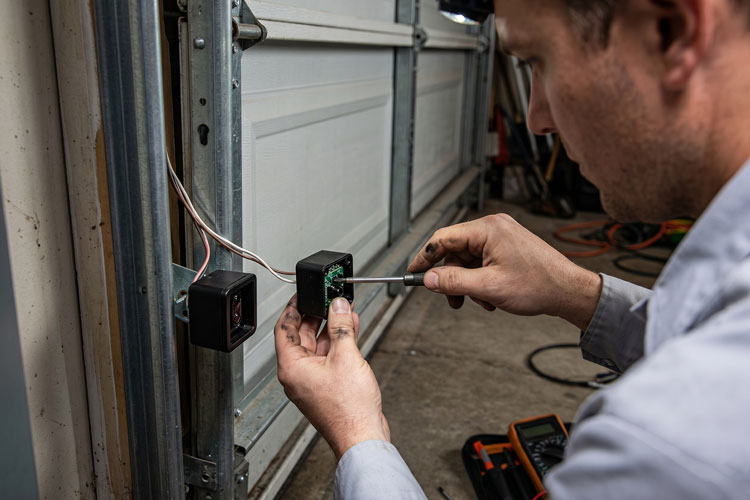
Precision Diagnostic Tools: We use specialized equipment to test signal strength and wire continuity.
-
Local Expertise: We understand how Boca Raton’s climate affects your specific garage door model.
-
Genuine Parts: We carry OEM sensors for all major brands, ensuring long-term compatibility.
-
Full Safety Inspections: Every garage door sensor repair includes a comprehensive check of your door’s balance, cables, and springs to ensure total system health.
Conclusion
Garage door sensor repair in Boca Raton requires a balance of technical knowledge and an understanding of the local environment. By avoiding these common mistakes, such as misdiagnosis, poor alignment, and neglecting the effects of South Florida’s sun and humidity, you can ensure your garage door remains a safe and reliable part of your home.
Remember, your garage door is likely the largest moving object in your house. Attempting to “get by” with a faulty safety system is never worth the risk. Whether you are dealing with a “sun phantom” issue on a bright afternoon or a corroded wire from the salt air, a professional approach to sensor repair is the best investment you can make for your home’s security and your family’s peace of mind.
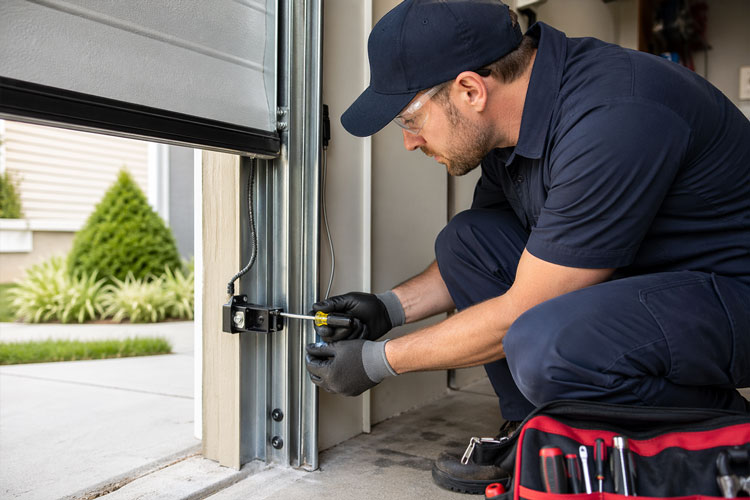
Experience the Best Garage Door Services in Boca Raton
Don’t let a malfunctioning sensor ruin your day or compromise your safety. At First Garage Door Repair, we are proud to serve the Boca Raton community with expert repair, installation, and maintenance services. Our team of highly trained technicians is ready to handle everything from routine garage door sensor repair to full system overhauls.
Why Choose Us?
- Fast Response Times for Boca Raton Residents
-
Comprehensive Residential and Commercial Solutions
-
Expertise in South Florida’s Unique Climate Challenges
Ensure your garage door is in top shape today. Book your appointment or call us for immediate assistance. Let the pros handle your garage door needs so you can get back to enjoying the Boca Raton lifestyle!